
The Most Common Mistakes People Make When Buying Reclaimed Wood
Introduction
Reclaimed wood has a way of drawing people in. A lot of buyers are attracted to its history and character long before they learn much about the material itself. Whether it came from an old barn, a grain facility, or a factory that stood for generations, reclaimed wood carries signs of a previous life that newer lumber simply does not have. The grain, weathering, and worn edges are part of the appeal. At the same time, reclaimed wood is not always as straightforward as it first appears. Different products can vary quite a bit, and choices made early in the process often affect how the finished project looks and performs. Here are some of the mistakes buyers run into most often and what can help prevent them.
Mistake 1: Assuming All Reclaimed Wood Comes from the Same Source
This is probably the most common misunderstanding in the market. People hear the term “reclaimed wood” and picture old barn boards, but reclaimed lumber can come from a wide range of structures. Barns, warehouses, grain elevators, factories, and agricultural buildings all age differently and leave different characteristics behind. A board that spent a century exposed to seasonal weather patterns will not look or behave exactly like lumber recovered from a protected interior structure. The source matters because it influences everything from color and texture to density and stability. Buyers who take the time to ask where the wood came from are usually rewarded with fewer surprises later.
Mistake 2: Falling in Love with Photos Instead of the Material
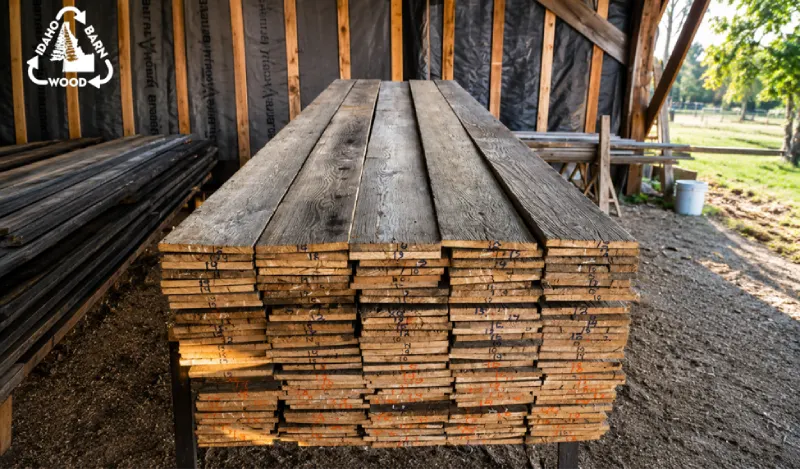
Photographs have a way of making reclaimed wood look almost perfect, which is slightly ironic considering perfection is not really the point. Good photography captures texture and character, but it cannot tell you how consistently the material has been milled, whether boards vary dramatically in thickness, or how much preparation went into making the product installation-ready. Some buyers become attached to a specific image and expect every board to look the same. That expectation rarely survives contact with reality. Reclaimed wood building materials are valued for their natural variation and individuality, not because every piece matches perfectly.
Mistake 3: Ignoring Preparation and Processing
A surprising number of people focus entirely on the age of the wood while overlooking what happened after it was recovered. The truth is that reclaimed lumber earns its value through processing just as much as through history. Old nails need to be removed. Boards need to be inspected, sorted, cleaned, and milled. Quality control matters. In fact, when evaluating reclaimed wood flooring, the preparation process often has more influence on long-term performance than the age of the lumber itself. A beautiful board that has not been properly processed can quickly become a headache during installation.
Mistake 4: Shopping for the Lowest Price
There is nothing wrong with being price-conscious. Most people have a budget. The problem arises when price becomes the only factor driving the decision. Authentic reclaimed wood involves labor at nearly every stage. Structures must be carefully dismantled, materials transported, metal removed, and boards prepared for reuse. Those steps require time and expertise. If a product seems dramatically cheaper than similar offerings elsewhere, it is worth slowing down and asking a few more questions. Sometimes there is a reasonable explanation. Other times, the lower price reflects compromises that only become apparent after delivery.
Mistake 5: Not Thinking About the Finished Space
One mistake that tends to show up later in the process is focusing entirely on the wood itself without considering the room where it will be installed. A board can look incredible in a showroom and feel completely different once it is surrounded by cabinetry, flooring, lighting, and furniture. Before making a decision, it helps to think through a few practical considerations:
- How much natural light enters the space
- Existing finishes and color palettes
- The amount of rustic character you actually want
- Your comfort level with natural variation
- Long-term maintenance expectations
These details sound simple, but they often determine whether a space feels balanced or visually overwhelming once everything comes together.
Mistake 6: Buying from a Supplier That Cannot Answer Detailed Questions
Reclaimed wood is not a commodity product. It carries history, and that history matters. It is the responsibility of a qualified provider to explain the origin of the material, the manner in which it was processed, and the reasons why it might be suited for one application but not another. If basic questions are met with vague answers, that is usually a sign worth paying attention to. At Idaho Barn Wood, we have always believed that educating customers is part of the process. The more information buyers have, the easier it becomes to choose materials that genuinely fit their project rather than simply looking good in a photograph.
Mistake 7: Assuming Every Reclaimed Product Serves the Same Purpose
That assumption can create problems that are not always obvious at the start of a project. Reclaimed wood is not a one-size-fits-all material. A board that looks perfect for a feature wall might be completely wrong for a floor, and timber intended for structural use serves a very different purpose than decorative siding or ceiling planks. These distinctions matter more than many buyers realize. It is easy to focus on appearance, especially when the wood has great character, but where and how it will be used is just as important. Taking the time to match the material to the application usually prevents headaches later and leads to a finished project that performs the way it should.
Conclusion
Buying reclaimed wood is not especially difficult, but it is one of those materials that rewards people who take the time to learn a little about what they are buying. The projects that tend to turn out best are often the ones where the buyer asks questions, looks closely at the boards, and pays attention to the story behind the material rather than focusing only on color or dimensions. Every piece has lived a different life, and that history is part of what makes reclaimed wood appealing in the first place. The nail marks, weathering, grain patterns, and small imperfections are not defects. They are evidence of decades of real use. If reclaimed wood is being considered for an upcoming project, feel free to reach out to Idaho Barn Wood. Helping customers sort through options, answer questions, and find materials that genuinely fit the space is a part of the process that is never rushed.
FAQs
1. How can I tell if reclaimed wood is authentic?
Ask about the material’s source, processing, and history. Reputable suppliers should be able to explain where the wood came from and how it was prepared.
2. Is reclaimed wood more expensive than new lumber?
Often, yes. The cost reflects the labor involved in recovering, cleaning, inspecting, and milling the material for reuse.
3. Does reclaimed wood require special maintenance?
Not necessarily. Maintenance depends more on the application and finish than on the age of the wood itself.
4. Is reclaimed wood flooring durable enough for everyday use?
When properly processed and installed, reclaimed wood flooring can perform just as well as many new hardwood flooring products.
5. Why do reclaimed wood boards vary in color and texture?
Natural variation is part of what makes reclaimed wood unique. Differences in age, exposure, and original use create distinct character from board to board.